Welcome to INFI Group of Institutions, Sivakasi's premier hub for academic excellence and competitive career growth.
IMPROVE
Personalized attention to strengthen your core skills.
NURTURE
A supportive environment that builds confidence.
FOCUS
High-quality materials to keep you locked on your goal.
IMPART
Wisdom and strategies to crack any examination.
Your Path to Success Starts Here
Whether you are a school student aiming for top ranks or an aspirant preparing for TNPSC, UPSC, Banking, or SSC, we bridge the gap between effort and achievement.
Expert Mentors: Learn from the best in the field.
Smart Curriculum: Updated as per latest exam patterns.
Weekly Tests: Analyze your performance with regular mock exams.
At INFI, we don't just teach subjects; we build mindsets. Our mission is to instill a lifelong passion for learning.
Visit us at Behind Kammavar Kalyana Mandapam, Sivakasi.
Elevate Your Expertise..!
At INFI Group of Institutions, we bridge the gap between classroom theory and industry reality. Our curriculum is designed to transform beginners into confident professionals ready for the global workforce.
Programming & Logic
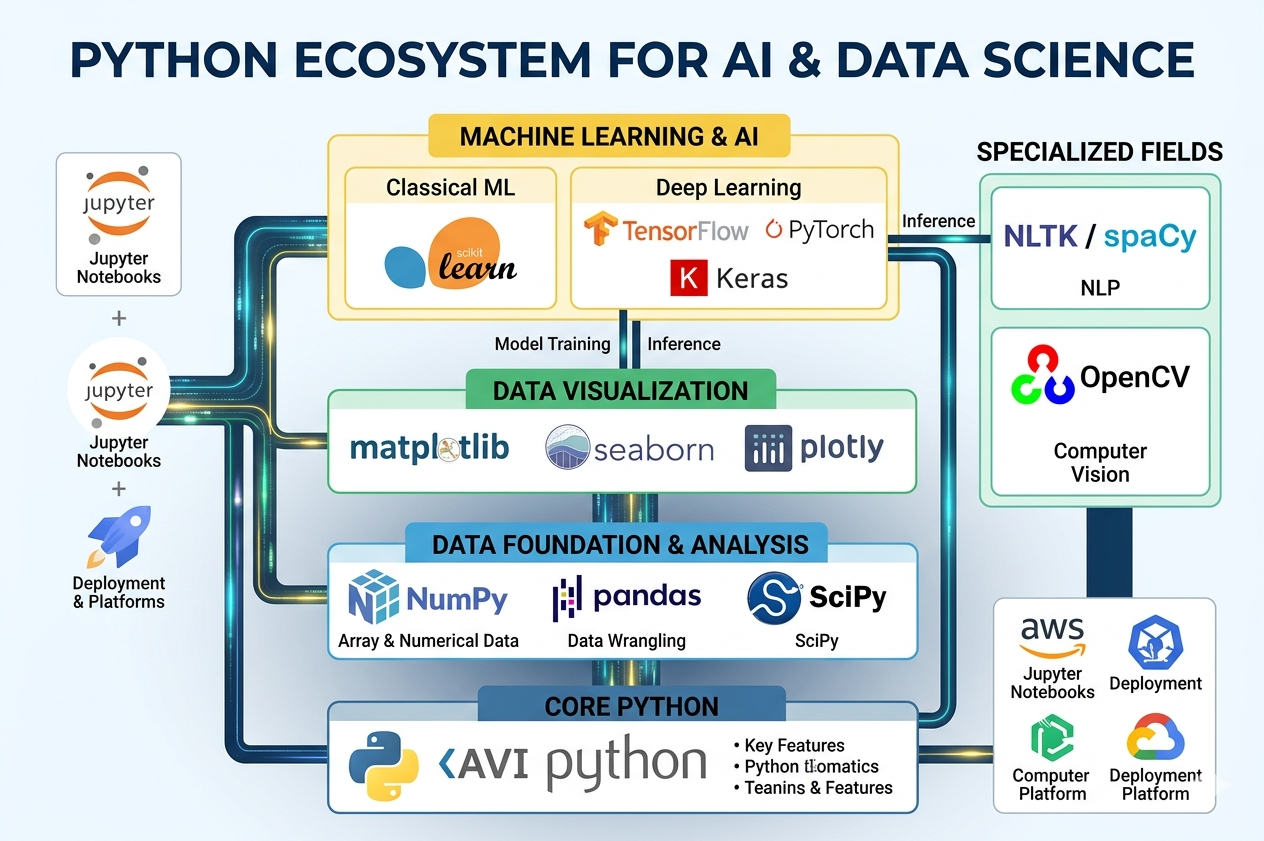
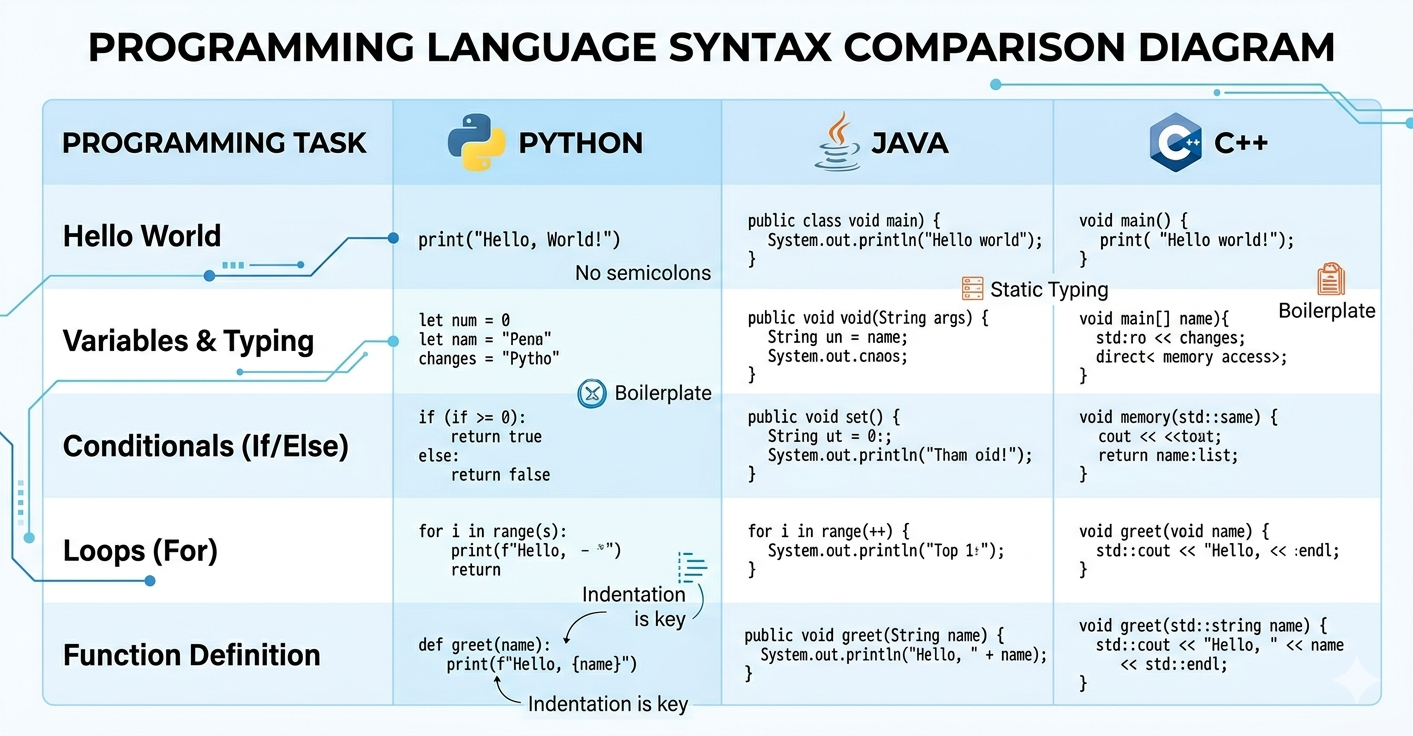
Python Programming: Data science, automation, and backend development.
Studying Tally Prime and ERP (Enterprise Resource Planning) Management is essential for anyone aiming for a career in finance, accounting, or business operations. In 2026, these skills are no longer just "add-ons"—they are the core requirements for managing a modern, data-driven business.
1. Industry Standard for SMEs
Tally Prime is the go-to accounting tool for thousands of businesses. Mastering it provides immediate employability due to its widespread market presence and transaction speed.
Market Presence:
Thousands of businesses rely on Tally for daily bookkeeping. Knowing it makes you immediately employable in almost any industry.
Simplicity & Speed:
Unlike complex international software, Tally is known for its "speed of entry." Mastering it allows you to handle high volumes of transactions with minimal friction.
2. Mastery of GST & Compliance
Automated Tax Filing:
Automated Tax Filing: Tally Prime 2026 features advanced tools for GST, TDS, and TCS. It automatically detects errors in your tax returns before you file them.
Audit Readiness:
Studying Tally teaches you how to maintain an "Audit Trail" (Edit Log), which is a legal requirement for many companies to ensure transparency.
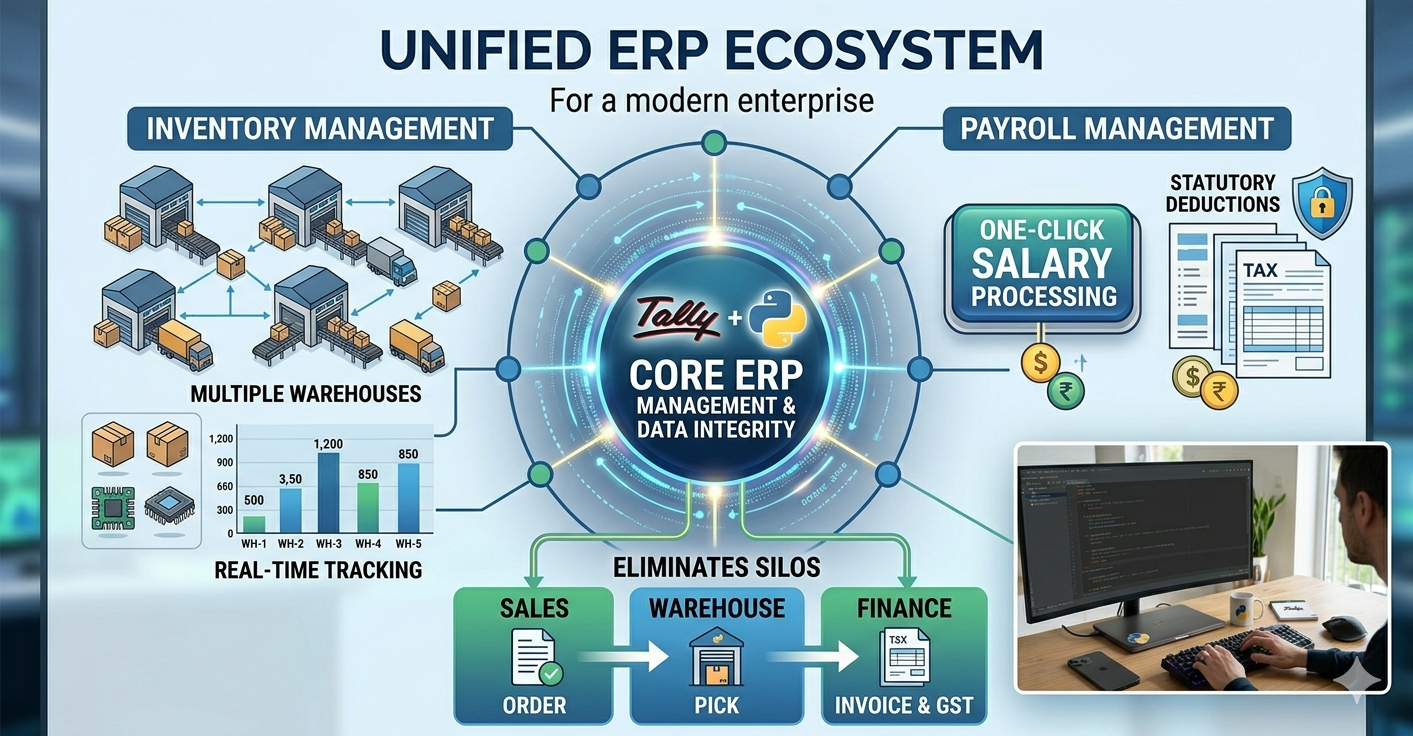
3. Unified ERP Ecosystem
Beyond simple accounting, ERP management integrates various departments:
Inventory: Real-time tracking across multiple warehouses.
Payroll: One-click salary processing and statutory deductions.
Data Integrity: Eliminates silos between sales, warehouse, and finance.
4. Career Growth and High Demand
The job market in 2026 highly rewards "Practical Accountants" over those who only have theoretical knowledge.
Diverse Job Roles: You can qualify for roles such as Accounts Executive, Inventory Manager, Tax Consultant, or Financial Analyst.
Freelancing Opportunities: Many small business owners look for certified Tally professionals to manage their accounts on a part-time or project basis, providing a great source of side income.
5. Decision-Making with Real-Time Analytics
Modern ERPs like Tally Prime 7.0 (the 2026 standard) aren't just for recording data; they are for analyzing it.
Instant Reports: Generate Balance Sheets, Profit & Loss statements, and Cash Flow projections instantly.
Predictive Insights: Studying ERP management teaches you how to use these reports to predict future trends, helping business owners make informed decisions rather than guessing.
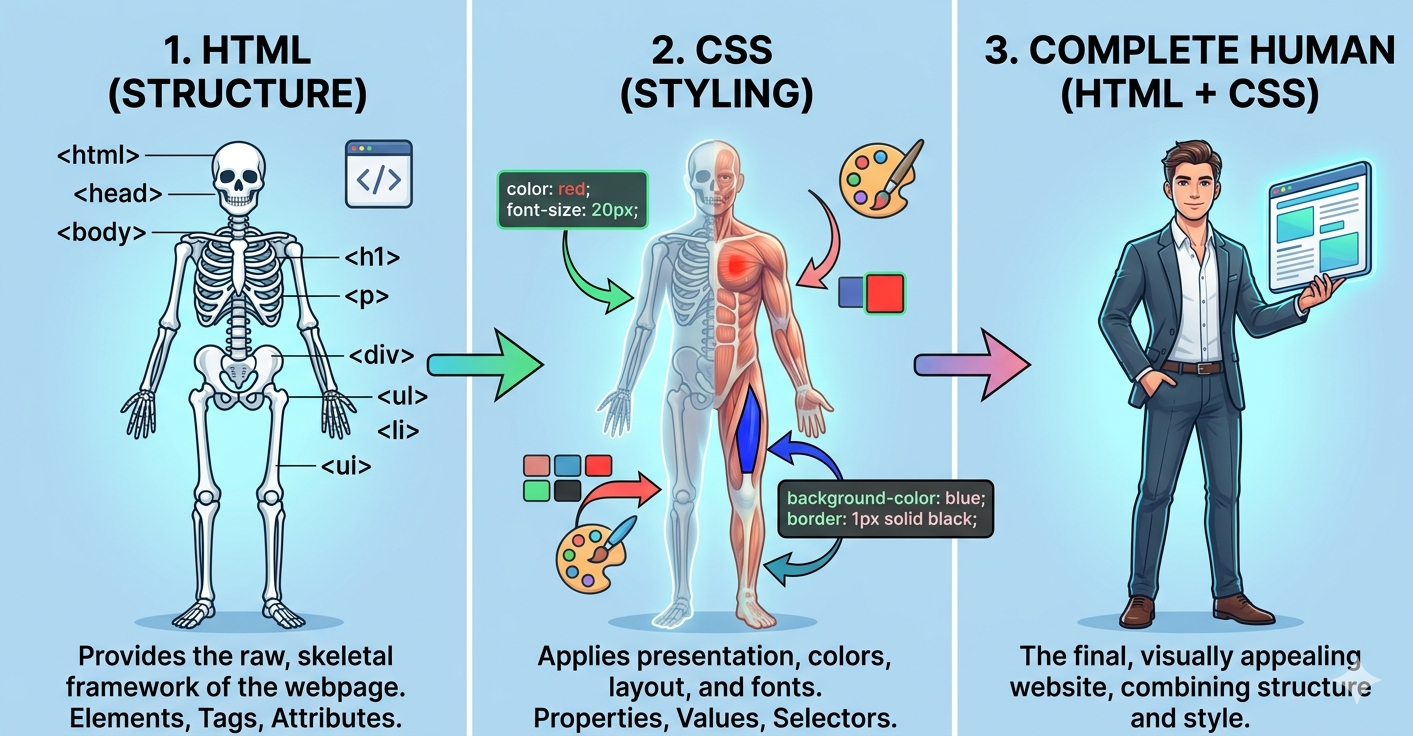
Studying HTML and CSS is the foundational step for anyone looking to enter the world of web development. These two languages form the "front-end" of the internet, acting as the building blocks for every website you visit.
Here is why mastering them is essential:
1. The Foundation of the Web
Every website, regardless of how complex it is (from a simple blog to a massive platform like Facebook), is built on HTML (HyperText Markup Language).
HTML provides the structure: it defines where the headers, paragraphs, images, and links go.
CSS (Cascading Style Sheets) provides the presentation: it controls the colors, fonts, spacing, and layout.
Without these two, the internet would just be plain text without any visual organization or design.
2. Full Control Over Design
When you use "drag-and-drop" website builders, you are limited to their templates.
By learning HTML and CSS, you gain the power to:Customize everything: Change the exact shade of a button or the specific pixel-spacing of a layout.
Fix bugs: If a template looks broken on a mobile phone, you can dive into the code and fix it yourself.
Create unique experiences: You aren't boxed in by what a software provider thinks a website should look like.
3. Career Versatility
Digital Marketing: Customize emails and landing pages.
UI/UX Design: Understand technical constraints.
Data Science: Build dashboards and scrape web data.
4. A Gateway to Advanced Programming
HTML and CSS are often considered "entry-level" because they are visual and provide immediate feedback. Learning them builds the logical mindset needed for more complex languages:
Once you understand how the DOM (Document Object Model) works through HTML and CSS, learning JavaScript becomes much easier.
It introduces you to concepts like syntax, debugging, and file structures in a low-stakes environment.
5. Cost and Efficiency
For entrepreneurs and small business owners, these skills are a major cost-saver. Instead of hiring a developer for every minor change—like updating a price, changing a logo, or adding a new testimonial—you can make those updates in seconds.
Fire and Safety Engineering: Protecting Lives and Infrastructure
Fire and Safety Engineering is a multidisciplinary field focused on protecting people, property, and the environment from the destructive effects of fire and related hazards. It combines principles from chemistry, physics, and various engineering branches to design systems and protocols that prevent, control, and mitigate fire risks.
Core Pillars of Fire Safety
The field is generally divided into two main strategies: Active and Passive fire protection.
1. Passive Fire Protection (PFP)
PFP is integrated into the structure of a building to contain a fire at its point of origin and prevent it from spreading. It does not require motion or electricity to function.
Fire-Resistant Walls and Floors: These act as barriers to compartmentalize the building.
Fire Doors: Specialized doors that maintain the integrity of fire-rated walls.
Intumescent Coatings: Paints that swell when exposed to heat, providing an insulating layer to structural steel.
2. Active Fire Protection (AFP)
AFP systems require some form of action or motion to work. They are designed to detect a fire and then suppress or extinguish it.
Detection Systems: Smoke, heat, and flame detectors that provide early warning.
Suppression Systems: Automatic sprinklers, gaseous agents (for server rooms), and fire extinguishers.
Emergency Lighting: Ensuring occupants can see exit routes during a power failure.
3.The Fire Triangle and Tetrahedron
To engineer effective safety solutions, professionals must understand the chemistry of fire. Traditionally, fire was explained by the Fire Triangle (Heat, Fuel, and Oxygen). However, modern engineering uses the Fire Tetrahedron, adding a fourth element: the Uninhibited Chemical Chain Reaction. If you remove any one of these four elements, the fire is extinguished.
4.Key Responsibilities of a Safety Engineer
Fire safety engineers perform several critical functions throughout the lifecycle of a building or industrial plant:
Fire Risk Assessment (FRA): Identifying potential ignition sources (like faulty wiring) and combustible materials, then evaluating the risk to occupants.
Egress Analysis: Designing exit routes, calculating "travel distances," and ensuring that stairwells are pressurized to keep smoke out during an evacuation.
Smoke Control Systems: Designing ventilation systems that extract toxic smoke, which is often more lethal than the flames themselves.
Hydraulic Calculations: For large industrial sites, engineers must calculate the water pressure and flow rates required for massive sprinkler networks or fire hydrants.
5.Industrial Applications
In environments like oil refineries or chemical plants, fire engineering becomes even more complex. Engineers must account for:
Flash Points: The lowest temperature at which a liquid gives off vapor to ignite.
Explosion Prevention: Using "intrinsically safe" equipment that cannot produce a spark in a flammable atmosphere.
Blast Walls: Protecting critical infrastructure from the pressure waves of a potential explosion.
Your Journey to Becoming a Professional Teacher Starts Here..!
Success in TNTET requires more than just reading books—it requires a strategy. Our program is designed to simplify complex concepts and maximize your score.
Why Choose Our TNTET Coaching?
Expert-Led Sessions: Learn from educators who specialize in Child Development, Pedagogy, and Subject-Specific disciplines.
Comprehensive Study Material: Simplified notes covering Paper I and Paper II, aligned strictly with the SCERT and NCERT syllabus.
Language Mastery: Intensive focus on Tamil and English proficiency to ensure high marks in language papers.
Mock Test Series: Real-time exam experience with 50+ topic-wise tests and full-length previous year question analysis.
Doubt-Clearing Forums: Interactive sessions to ensure no question goes unanswered.
The UGTRB Mathematics exam demands more than just knowing formulas—it requires the ability to solve complex problems within seconds. Our coaching program is engineered to transform your mathematical knowledge into exam-day success.
Why Our Mathematics Program Stands Out
Complete Syllabus Coverage: In-depth coaching for all 10 Units, including Real Analysis, Complex Analysis, Algebra, Differential Equations, and Statistics.
Shortcut Techniques: Learn time-saving tricks for competitive problem-solving without compromising on accuracy.
Rigorous Practice: 2,000+ Topic-wise MCQs and 15 Full-length Mock Tests modeled on the latest TRB patterns.
Step-by-Step Solutions: We don't just give the answer; we provide the complete logical derivation to ensure conceptual clarity.
Formula Vault: Access to our exclusive "Quick-Revision Formula Book" covering every important identity.
Turn Your Passion for Math into a Prestigious Career.
Don’t just prepare. Excel with the most comprehensive study resource designed specifically for the Tamil Nadu PG Assistant Recruitment.
[Download Free Study Planner] | [View Success Stories]
About TN PG TRB: The Opportunity
The Tamil Nadu Post Graduate Teachers Recruitment Board (TN PG TRB) exam is one of the most respected competitive exams in the state. It is the definitive gateway for Mathematics postgraduates to secure a permanent position as a Post Graduate Assistant in Government Higher Secondary Schools.
Why it matters:
Stability: A lifelong government career with a structured pay scale and excellent benefits.
Impact: Influence the next generation of engineers, scientists, and mathematicians.
Prestige: Join the ranks of the Tamil Nadu School Education Department.
The exam isn't just a test of what you know—it’s a test of speed, accuracy, and strategic preparation. With thousands of aspirants competing for limited seats, your preparation needs to be mathematically precise.
The TN PG TRB Mathematics Syllabus
The syllabus is vast, covering the depth of both B.Sc. and M.Sc. Mathematics. We break it down into high-yield modules to ensure you cover every theorem and formula.
Core Mathematics (110 Marks)
Unit 1: Real Analysis – Countability, sequences, Riemann integration, and Fourier series.
Unit 2: Complex Analysis – Analytic functions, Cauchy’s Theorem, and Residue integration.
Unit 3: Algebra – Group theory, Rings, Fields, and Linear Algebra (Vector Spaces).
Unit 4: Topology & Functional Analysis – Metric spaces, Banach spaces, and Hilbert spaces.
Unit 5: Differential Equations – Solving ODEs, PDEs, and boundary value problems.
Unit 6: Mechanics & Numerical Methods – Statics, Dynamics, and Interpolation techniques.
Unit 7: Operations Research – Linear Programming, Simplex Method, and Network Analysis.
Unit 8: Statistics & Probability – Distributions, Sampling theory, and Correlation/Regression.
Education Methodology (30 Marks)
Psychology of Learning and Development.
Teaching Pedagogy and Educational Innovations in Tamil Nadu.
History and Evolution of the Indian Education System.
General Knowledge (10 Marks)
Current Affairs, History of Tamil Nadu, and Basic Science.
Why Choose Our Strategy?
Theorem-Wise Shortcuts: Learn to solve complex problems in under 60 seconds.
Unit-Specific Mock Tests: Real exam-simulated environment to track your progress.
Previous Year Analysis: Deep dive into 10+ years of PG TRB question papers.
Tamil & English Support: Study materials designed for clarity in both languages.
"The difference between a candidate and a Post Graduate Assistant is a consistent study plan."
Ready to start your journey?
[Enroll Now for the 2026 Batch]
Limited Seats Available for Personalized Mentorship.